
Building faster,
smarter
construction.
European-grade SIP and CLT systems for the Australian building industry. Precision-engineered panels that accelerate build timelines, improve energy efficiency, and reduce reliance on scarce site labour.
- Precision-engineered panels — manufactured to ±0.2 mm
- Up to 50% faster construction programme
- 50–60% operational energy savings vs. code-built homes
reduction in on-site construction time
Mullens & Arif (2006)[1]
energy savings vs. standard code-built homes
SIPA[2]
less framing labour on site
BASF / RS Means (2006)[3]
more construction workers Australia needs by 2029
Master Builders Australia[4]
A faster, smarter way to build — is here.
Australia needs 1.2 million new homes by 2029. Panel Haus gives builders and developers the tools to meet that demand — without compromising on quality, performance, or programme.
Faster programme
SIP panels arrive pre-cut, pre-sequenced, and ready to install. The structural envelope goes up in days, not months — freeing trades to start sooner and projects to complete on time.
typical frame-to-lock-up with Panel Haus SIP construction
Less dependence on labour
Pre-fabricated panel systems require smaller crews and fewer sequential trades. More of the work happens in the factory — so less has to happen on site.
framing labour compared to conventional site methods
Less waste, lower impact
Panels are manufactured to exact project dimensions. What arrives on site gets installed — with minimal off-cuts, over-ordering, or disposal cost.
reduction in on-site construction waste with prefabricated panel systems
Consistent, precise results
Every panel is CNC-manufactured to tolerance. Performance is built in at the factory — not dependent on site conditions or trade-to-trade variation.
CNC manufacturing precision — every panel, every project
A faster, smarter way to build.
Structural panels are engineered and manufactured in a controlled factory environment, then delivered to site ready for assembly. The result: faster programmes, fewer trades, and better building performance — every time.
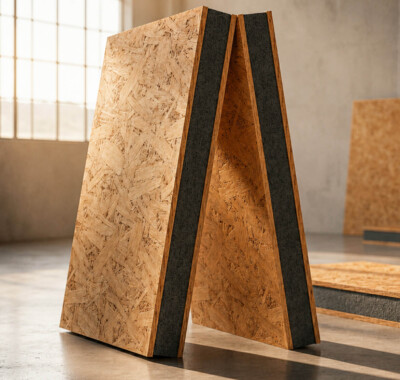
- Factory-controlled manufacturing — panels arrive dry, dimensionally stable, and ready to install; no weather delays, no warping, no waiting
- Integrated system — structure, insulation, and bracing in one panel; one delivery, one installation stage, with the envelope going up in days
- Continuous insulation core — GPS (Neopor) core delivers effective whole-wall R values well above minimum NCC requirements, with significantly reduced thermal bridging compared to conventional framing
- Repeatable precision — CNC manufacturing to ±0.2 mm delivers consistent results across every panel, on every project
- 30%+ less on-site waste — factory pre-cutting means fewer off-cuts, less skip hire, and cleaner sites
Real projects.
Real results.
See how builders and developers are using Panel Haus systems to deliver faster construction, precision builds, and energy-efficient structures across Australia.
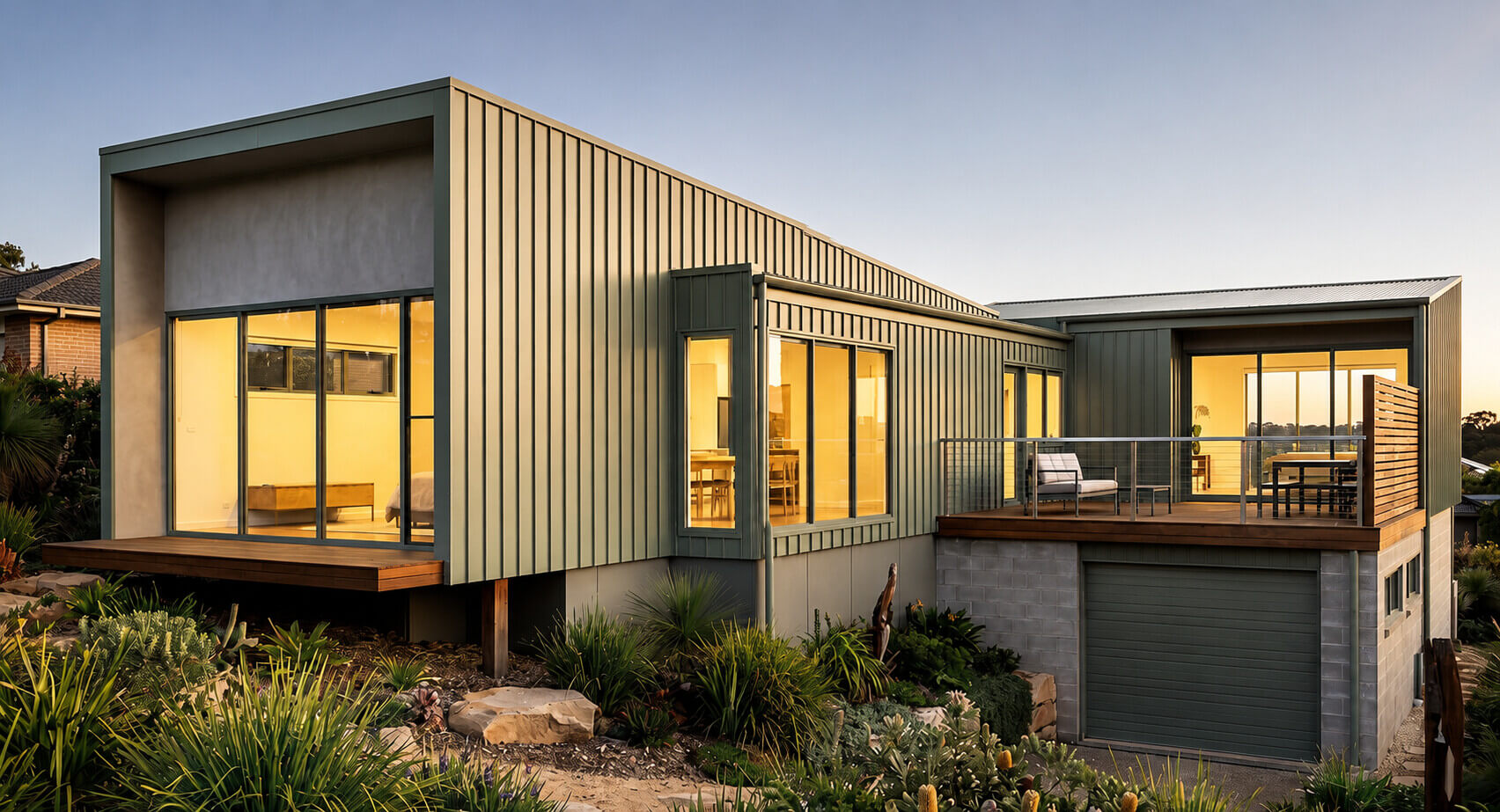
Lot 55 Syncarpia Crescent
SIP construction delivering accelerated installation and superior thermal envelope performance for a residential build on the Central Coast. Structural framing completed in days, not weeks.
From design to installation
Panel Haus simplifies construction by combining intelligent design, precision manufacturing, and efficient on-site assembly into a single coordinated process.
Design & planning
Structural layouts are developed in collaboration with architects and engineers — optimised for the panelised system so every opening, service penetration, and connection detail is resolved before manufacturing begins.
Panel manufacturing
SIP and CLT panels are manufactured in Europe under precision-controlled conditions using CNC machinery. Every panel is produced to project-specific dimensions — structural integrity and thermal performance built in at the factory.
Site delivery
Completed panels arrive labelled and sequenced, ready for immediate installation. Because structure, insulation, and sheathing are integrated, fewer separate deliveries and no on-site cutting is required.
Installation
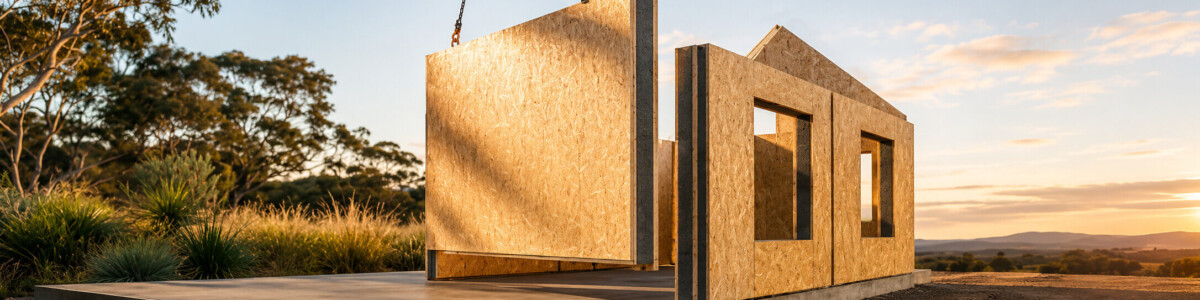
Panels are assembled to form the complete structural envelope — typically in days rather than weeks. Fewer trades, faster programme, and a building that meets its performance specification from day one.
Built on trusted partnerships
and proven systems.
Panel Haus works with established European manufacturing partners and experienced construction professionals to deliver reliable, high-performance building systems — backed by decades of independent research and real project evidence.
European manufacturing partners
Panels are manufactured in Europe using precision-controlled production systems — the same manufacturing base that supplies the world’s most advanced construction markets. European SIP and CLT systems have been mainstream structural methods for decades.
Independently verified performance
Every performance claim Panel Haus makes — energy savings, construction time, labour reduction, carbon impact — is sourced from peer-reviewed research, government studies, and independent industry data. We don’t market with approximations.
Built for builders and developers
Panel Haus is not a product catalogue. We provide full specification support, engineering coordination, and installation methodology from project feasibility through to structural completion. Our systems are suited to volume builders, custom home builders, and high-performance builders through to large-scale commercial and multi-storey developers — making the transition to panelised construction practically seamless.
Projects delivered across Australia
Panel Haus supports residential, architectural, and commercial projects across multiple Australian regions — with the technical and logistics infrastructure to deliver from specification to site regardless of project location.
From the people
who have built with us.
“Testimonial from builder or developer — coming soon.”
“Testimonial from builder or developer — coming soon.”
“Testimonial from builder or developer — coming soon.”
Ready to build
smarter?
Speak with the Panel Haus team about your upcoming project. Early design discussions identify the right construction system — and leverage the full time, cost, and performance advantage of panelised construction.
No commitment required. Consultations cover project feasibility, system selection, and an indicative programme and cost comparison vs. conventional construction.
[1] Mullens & Arif (2006); Drain et al. (2006); Murtaza et al. (1993) — cited in University of Colorado, CU Scholar (2013). ~50% reduction in on-site construction time vs. stick framing. [2] Structural Insulated Panel Association (SIPA), sips.org. SIP homes typically achieve 50–60% energy savings vs. standard code-built homes. [3] BASF Time & Motion Study (2006), RS Means / Reed Construction Data. Up to 55% less framing labour vs. traditional methods. [4] Master Builders Australia (2024), masterbuilders.com.au. 130,000 additional construction workers needed by 2029. [5] National Housing Accord (2023), Commonwealth of Australia. 1.2 million new homes over five years from mid-2024. treasury.gov.au [6] Olvera Advisors (2024), olveraadvisors.com. 91% of Australian builders cite labour shortages as a major challenge. [7] Premier SIPS / SIPA, sips.premierbuildingsystems.com. Factory pre-cut panels reduce on-site waste by 30%+. [8] SIPA EPD (2024); Oak Ridge National Laboratory. 165 mm EPS SIP: effective whole-wall R-21 vs. ~RSI 2.3 (R-13.3 imperial) for conventional 140 mm stud frame with RSI 3.4 insulation (R-19 imperial).